“It is looking at things for a long time that ripens you and gives you a deeper meaning. ”
– Vincent Van Gogh
How does art work? To this question, there is an amazingly simple answer. Art work is like medicine. If someone takes it on an empty stomach, it has a much more intense effect. If you apply it to art, this means that art has the most intense effect when it is viewed without disturbances, expectations, and stress.
All that sounds simple, but the implementation turns out to be difficult. Because everyone has a certain idea of what art should be and how it should work. Maybe it helps not to declare art as such, without the label the art could be part of reality. By looking at it without prejudice, art can stimulate very different areas of consciousness.
Art, especially painted art, has a noticeable effect on the viewer. But this effect does not come from the work of art itself, but rather from the viewer. Looking at a picture is like looking in the mirror. The mirror shows an objective message; only through the thoughts, feelings, and expectations of the viewer does an evaluation come about. It’s the same with a work of art. A black image can make the viewer sad. Instead of lamenting how sad the black picture makes, one could instead ask why the viewer feels that way or why the painter painted the picture that way. The saddening effect is not the problem of the picture but results from the experiences and expectations of the person looking at the picture.
However, art can influence people not only when they look at it. Art can be an opportunity to be creative and find a way to express feelings, work through conflicts, build self-confidence or cope with difficult times in life.
A work of art can trigger a variety of feelings in the viewer. The facets range from disgust and joy to pleasure and interest to fascination. Several factors play a role in this. On the one hand, of course, there is the content and motif of the work of art, but also the mood of the viewer, their experiences and how familiar they are with art. An artist’s level of awareness and market value also influence perception. Average viewers prefer representational art. However, the more they engage with abstract art, the more they learn to appreciate it. In this context, the psychology of perception has had an impact in recent times.
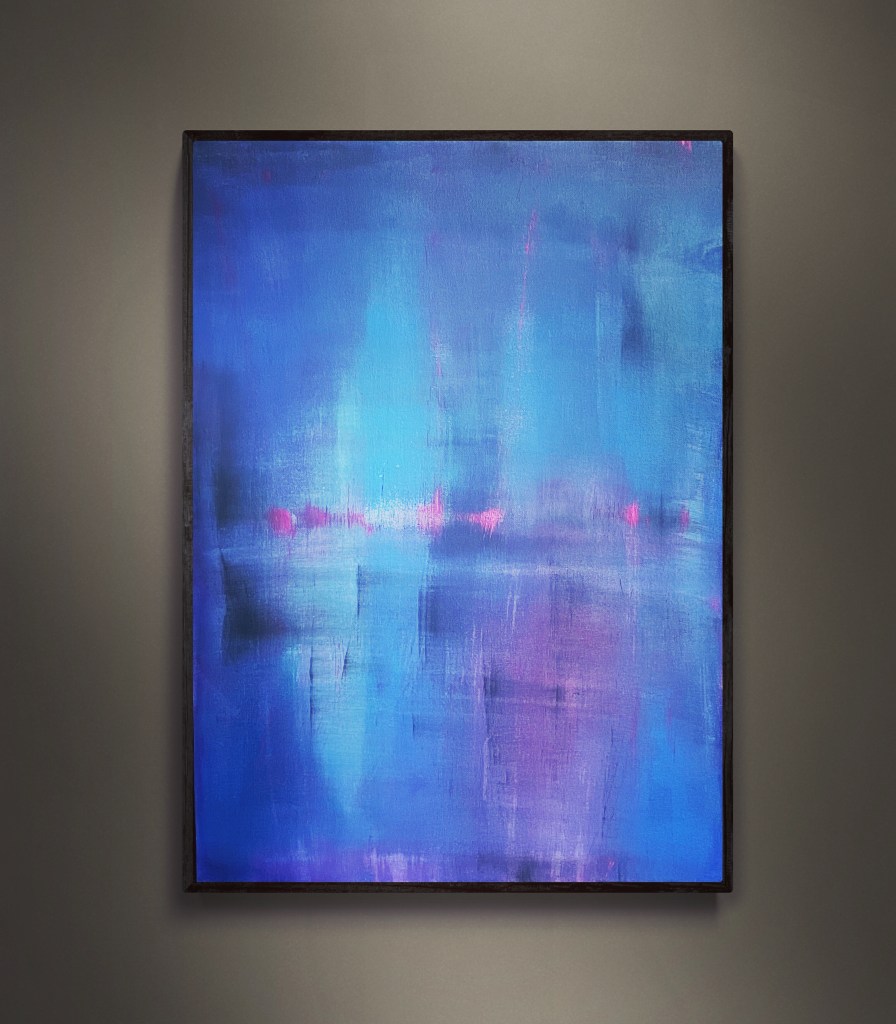
This painting was only done last week. I didn’t really have a plan, I just tried to let the colours do the talking. Comments about the painting are very welcome. Have a nice time and see you soon.
Kat
 KitKatArt